“The best of Nature and the best of Science” approach to Subhash Palekar Krushi
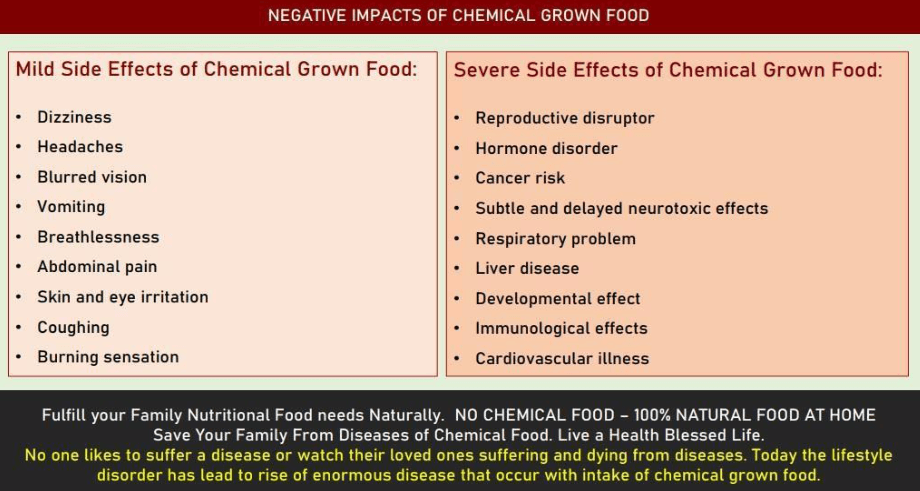
Our approach to farming is an integrated approach, wherein we will be completely moving away frompesticides and using combinations of cow dung and urine as natural substitutes to pesticide replacement. Bycontrolling the entire cycle, we aspire to be “truly natural” as per global standards. The bio-chemicals used today inthe form of fertilizers in conventional farming in agricultural lands today, are the largest cause of a host of uncureddiseases, like cancer and liver infections in animals and human beings. And also increases global warming andclimate change.
For attaining the above, the basic need is to amalgamate cow based farming and the traditional farming format, and repurpose the same through the above techniques to achieve chemical and pesticide free land. As crop rotations increase, the crop and land quality increasingly enhance for succeeding crops.
In chemically grown crops, there is no resistance power, so the crops are severely damaged. In Subhash Palekar Krushi (SPK), we create resistance power in the crops, so are not damaged. The God has a miracle gift to all living beings including plants, trees, and vines also that is resistance power. In chemical farming, residues of chemical fertilizers, chemical insecticides, and herbicides are deposited in the cells of plant or tree as toxic garbage, this poison (toxins) destroy the resistance power of plant body and they suffer by severe insect attack and disease attack. In Subhash Palekar Krushi (SPK), the humus is created in the soil, this humus donate resistance power to the crops, plant body and fruit trees. So, no any insect attack or disease attack, if technology of Subhash Palekar Krushi (SPK) is followed 100%.
There is another defense force of God to save the plants from enemy insects that is friend insects (predators), which destroy harmful insects. The proportion of friend insect is minimum and the proportion of enemy insects is maximum. But single friend insect kill thousands of harmful insects. In Subhash Palekar Krushi, we take specific intercrops like Marigold, Cowpea, Maize, Castor, Fenugreek, Coriander, Bengal gram, Onion flowers, and Pigeon pea. Holy basil, Beans, Black gram, Radish, Pearl millet (Bajra), Drumstick, which attract the friend insects and honey bees, these friend insects control automatically harmful insects. It is called biological control system.
Why Subhash Palekar Krushi (SPK)?
Exploring the Important Role of Subhash Palekar Krushi
In the green revolution era, the plant protection chemicals including all pesticides like fungicides, insecticides, weedicides were used extensively to protect plants from pest and diseases. The argument behind using pesticide is that with the intensive agriculture, the problems of insect pests and diseases are taking complex shape and posing serious challenges. So the use of pesticides during last few decades has emerged as one of the essential agro-inputs to increase and sustain crop yields. Scientific surveys and evidences indicate that particles of pesticides, sprayed or used over crops leave un dissolved and harmful elements which are transferred to human and other living bodies through grains, vegetables, fruits and grasses, causing a number of diseases, ailments and harmful effects on our health. To overcome the ill effects of chemical based farming, Organic farming was advocated. But organic farming is also proving to be costly and farmers are again falling in trap of industry. Thus a more sustainable farming system is required which can enhance farm income and also reduce dependence on external inputs.
Subhash Palekar Krushi is a revolutionary approach that prioritizes environmental sustainability, natural resource conservation and the production of nutritious food. Subhash Palekar Krushi practices minimizes the use of synthetic fertilizers and pesticides, reducing pollution and preserving the natural ecosystem. This explores the positive environmental impact of farming, including soil health, biodiversity and climate change mitigation.
Subhash Palekar Krushi produces nutrient-dense food that is free from harmful chemicals (like Arsenic, Cadmium, Chromium, Mercury, Nickel, and Lead). This farming enhanced nutritional profile of Natural produce, including higher levels of antioxidants, vitamins, and minerals compared to conventionally grown foods. Subhash Palekar Krushi can be a profitable and sustainable business model. This examines the economic benefits of farming, including premium pricing, reduced input costs, and increased market demand for Natural products.
The Social Impact of Subhash Palekar Krushi promotes community engagement, fair labor practices, and social equity. This explores the positive social impact of farming, including improved rural livelihoods, community empowerment, and ethical food production. Subhash Palekar Krushi is the Future and a key component of Sustainable Agriculture.
Indian Council of Agricultural Research (ICAR), New Delhi has published a big English book – Hand book of Agriculture, Edition October 2013, 6th edition, in this book on page no 78, it is written that many fertilizers, phosphoric fertilizers contains so many poisonous heavy metals like Arsenic, Cadmium, Chromium, Mercury, Nickel, Lead, which accumulate in the soil and cause long term effects on crop yield, quality, also, which damage soil micro flora. So, it is the 100% scientific evidence given by Indian Council of Agricultural Research, New Delhi, to prove that chemical farming and organic (commercial) farming both are dangerous.
Benefits and Objectives of Subhash Palekar Krushi -
Below are some of the major Benefits and Objectives of Subhash Palekar Krushi :
Nutritional Powerhouse of Subhash Palekar Krushi (SPK)
Antioxidants : In SPK grown vegetables are packed with powerful antioxidants, such as Carotenoids (are yellow, orange, and red organic pigments that are produced by plants and algae, as well as several bacteria, Achaea, and fungi) and Favonoids (a group of natural substances with variable phenolic structures, are found in fruits, vegetables, grains, bark, roots, stems, flowers, tea and wine. These SPK products are well known for their beneficial effects on health and efforts are being made to isolate the ingredients so called flavonoids), which help to protect cells from oxidative damage and reduce the risk of chronic diseases.
Fiber : In SPK grown vegetables are rich in dietary fiber, which is essential for maintaining a healthy digestive system, promoting feelings of fullness and supporting overall metabolic function.
Photochemical : In SPK grown vegetables contain a wide array of beneficial photochemical, such as glucosinolates and polyphones, which have been linked to a reduced risk of certain types of cancer and improved cognitive function.
Health booster : By choosing to consume SPK grown vegetables, you can take a proactive step towards improving your overall health, supporting sustainable agriculture and contributing to a more environmentally-conscious future.
The medicinal benefits of SPK grown vegetables extend far beyond their exceptional nutritional profile, encompassing reduced exposure to harmful chemicals, environmental sustainability, and ethical farming practices that promote the well-being of both consumers and the planet.

Important terms related to Subhash Palekar Krushi (SPK)
To overcome the ill effects of chemical based farming as well as Organic farming, introduction of Subhash Palekar Krushi - a concept suggested by Padmashri Subhash Palekar, is a viable and sustainable option. As per concept, all essential as well as micronutrients required by the crop/plants are present in soil but are in unavailable form. Plant use nutrients from soil through mineralization and billions of microorganisms are available in soil for this job. But continuous use of chemical fertilizers and pesticides has reduced population of these useful microbes and need to be rejuvenated. Cow dung and urine of domestic Indian cows is good source of these microbes and its use has given promising results.
When you start to practice Subhash Palekar Krushi (SPK), Formerly Zero Budget Natural Faming and also known as SUBHASH PALEKAR NATURAL FARMING ( SPNF), if you commit some mistake while practicing, then it is possible that, 100% resistance power may not be created in the first year, then you have to spray some Natural bio pesticides, which are prepared in our farm or home, not to be purchased from market, as Neemastra, Bramchastra, Agniastra, Dashaparni Kashayam (Astra).
1) Neemastra (Neem missile) –
2) Bramhastra (Brmaha Missile) –
3) Agni Astra (Agni missile) –
4) Dashaparni Kashayam –
5) Sapta Dhanyankur Kashayam –
All diseases will be controlled by Jiwamrita spray only. No use of sour buttermilk for spray. Only Jiwamrita is enough.
Principles of Subhash Palekar Krushi:
Below are key Principles of Subhash Palekar Krushi :
Components of Subhash Palekar Krushi
Bijamrita, Jeevamrutha, Acchadana and Whapasa
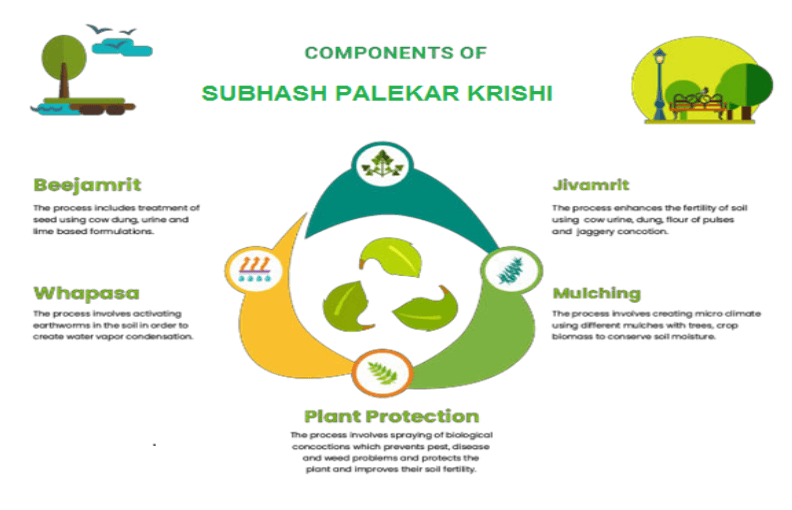
There are four primary Subhash Palekar Krushi components and models :
1.Bijamrita : As native cow species are more adapted to our region’s climatic circumstances and easier for small and marginal farmers to maintain, the seeds are treated with formulations made using their dung and urine. While neem leaves and pulp, tobacco, as well as green chili extracts are used to manage insects and pests, bijamrita is utilized to treat seeds.
Benefits : Fungal and other seed- and soil-borne infections may impact the seeds sowed in the field.The seeds are shielded against illnesses by the “Bijamrita” seed treatment.
2.Jiwamrita/Jeevamrutha : A natural resource utilized to restore the fertility and nutritional value of soil is cow dung. A grime of cow dung may contain 300–500 billion helpful microorganisms. These bacteria help decompose the soil’s biomass and transform it into readily usable nutrients for crops. Cow dung and cow urine are used to make Jiwamrita. It is a component of the plants’ diet. It is a fermented microbial culture made from uncontaminated soil, jaggery, cow dung, urine, and pulse flour. When applied to soil, this fermented microbial culture enriches the soil with nutrients and acts as a catalyst to encourage the activity of earthworms and microorganisms. For each hectare of land, 500 litres of jeevamrutha should be applied twice a month; following three years, the system might become self-sustaining. A single native cow is adequate 30 acres of land.
Benefits : By promoting soil microbial activity, this culture improves the availability of nutrients to plants, shields crops from soil diseases, and raises the carbon content of the soil.
3.Acchadana/Mulching : The process of mulching involves adding cover crops, Natural debris, or agricultural residue to the topsoil.
Benefits : Decomposing the materials used for mulching results in humus, which not only improves soil, Nutritional status but also conserves topsoil, boosts soil water retention, reduces evaporation loss, and promotes soil fauna. It also inhibits weed growth.
4. Waaphasa/Moisture (Soil Aeration) : For plants to grow and thrive, the soil must have adequate aeration.
Benefits : Applying Jiwamrita and mulching promotes soil aeration, humus content, availability of water, water retention capacity, and soil structure, all of which are essential for crop growth, particularly during dry spells.
Facts about Subhash Palekar Krushi :
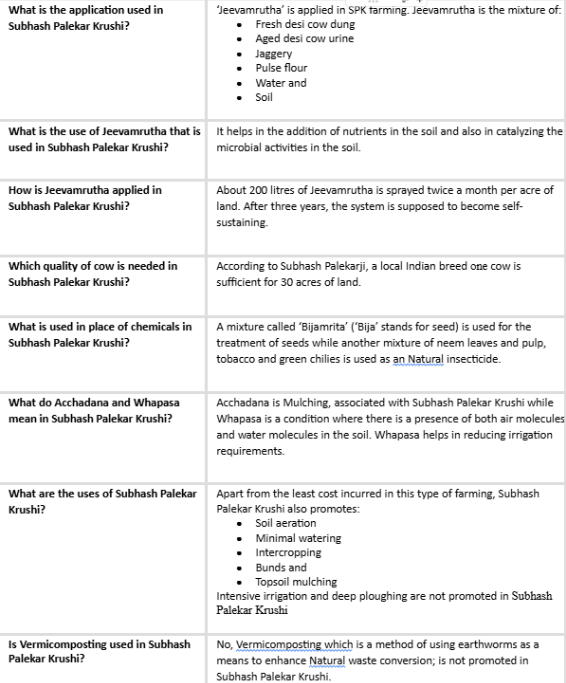
A few important details about Subhash Palekar Krushi are given in the table below :
Cropping Models of Subhash Palekar Krushi
The approach is based on producing polycultures, or short- and long-term (main crop) crops together, in order to recover the cost of raising the main crops from the income from the short-term crops, resulting in “zero” spending for the main crop. Accordingly, the term “Zero Budget Natural Farming” is used formly for this farming model.
State Govts. following Subhash Palekar Krushi Officially –
Government of Himachal Pradesh has decided to implement an innovative technique of Subhash Palekar Natural Farming (SPNF) under a new scheme called “PRAKRITIK KHETI KHUSHHAL KISSAN” to reduce cost of cultivation and enhanced farm income for the comprehensive and long term welfare and prosperity of farmers and to safeguard them from the adverse climate effects. The scheme has been announced by the Hon’ble Chief Minister, Government of H.P. in the Budget speech for the year 2018-19 and a budget provision of Rs. 25 crores has been made for the financial year 2018-19.
Thus to reduce cost of cultivation and enhanced farm income, Department of Agriculture Himachal Pradesh has decided to implement Subhash Palekar Natural farming (SPNF) under new scheme called “PRAKRITIK KHETI KHUSHHAL KISSAN”
There are several states practicing Subhash Palekar Krushi by name of Subhash Palekar Natural Farming. Prominent among them are Andhra Pradesh, Chhattisgarh, Kerala, Gujarat, Himachal Pradesh, Jharkhand, Odisha, Madhya Pradesh, Rajasthan, Uttar Pradesh and Tamil Nadu.
Marketing of Produce from Subhash Palekar Krushi
The indiscriminate use of chemical fertilizers and pesticides is a threat to soil and environment. This has adversely impacted the crop response ratio and created an imbalance of nutrients in the soil. The crop response ratio has reduced from 58 percent in the last six decades. The ideal ratio of the three major plant nutrients, Nitrogen, Phosphorous, and Potassium of 4:2:1 is disrupted.
We shall be launching marketing campaigns at targeted societies & will be communicating the advantages of “Subhash Palekar Krushi Products” over produce by other traditional methods.
Our agriculture marketing involves below system:
1.Assembling : Assembling is the process of gathering produce in one place.
2.Grading : Sorting of produce.
3.Washing : Washing the produce.
4.Packaging : Sorting & packing of vegetables as per order received with Quality packaging.
5.Storage : Packaged orders kept in cold room for transportation.
6.Transportation : Transportation of packaged orders in refrigerated vehicles to society.
7.Distribution : Distributed to consumers via delivery boys.
Revenue Model:
We are going to make tie-ups with Residential housing societies. We would be approaching our end consumers with our Qualified and Trained sales team individually by giving our pre packed samples of our produce to the society member i.e. B2C to educate them the benefits of using “Natural Farming Produce”. We would also make a database of each consumer of their buying habits & average consumption of every household vegetable, this will help us to grow & seamless supply of vegetables to the client.
As we would be getting orders online, we will also educate our consumers the process of order booking mostly. We shall be using “QUICK COMMERCE PLATFORM”, for this platform or we will develop an Android and IOS application as per consumer needs. We will also have a dedicated call center to interact with consumers.
Once orders are received our application, team will sort, wash & pack the orders at our facility only & shall be transported via refrigerated vehicle to keep the orders fresh. Once the vehicle reaches the society our delivery man will deliver the orders to the consumers.
Successful business-to-consumer (B2C) marketing and commerce is about building digital into the organization itself. It is an approach fueled by the ability to move quickly and easily by leveraging digital technology and tools. As the transfer of consumer demand from offline to online pathways accelerates, direct-to-consumer e-commerce has become crucial for B2C businesses. Investment in data and digital enables the whole organization to collaborate and deliver exceptional customer experiences. It optimizes opportunities to acquire new customers, and enhances engagement with existing customers while reducing operational costs.
We are in talking with societies with high income group. Since we shall be doing business Aim B2C channel, we shall be saving good margin of money that we can offer to our clients as we are selling directly to consumers & there in no role of “Traders”, “Wholesalers” & “Retailers”.
With this channel we can increase our profit margins & also make various schemes for consumers for to promote sales.
Our target is to make more clients which are our regular customers in a year, to service our customers we need to develop infrastructure at our farms, this includes such as Go downs, Irrigation, Watershed development, Rural electrification, roads system, cold storage etc.
Post Covid-19 pandemic everyone has realized the importance of nature & naturally grown products, we are also focusing on creating market, where consumers can have naturally grown vegetables with efficient infrastructure & distribution network with no side effects delivered at their door steps.
Agro Tourism
We can’t deny the fact that agriculture is the backbone of India and a great percentage of our economy depends on the agriculture sector. Having stated this, agro-tourism is the latest trend gaining popularity in the country. In the world of climate change and pandemic, people are now keener towards finding their roots and going back to nature.
This is why farm stays are now blossoming in India. These places offer authentic village and farm life by providing interactive experience of rural life. Fresh air is all we seek today and these are places where we can repair our polluted lungs!
“Agro Tourism” it is also called rural tourism, where people visits, works in farms or other agricultural operations for the purpose of enjoyment, education, or other active involvement. Agro-tourism encompasses a wide variety of activities and provides and provides additional income.
We shall also be generating revenue with Agro Tourism. Since our project is very near to Shirdi, people across the country visits Shirdi, we can offer schemes & offers to our existing clients as well we can also create online advertisement for the same.

We will make cottages & mud houses in a dedicated part of farm where one can feel the nature & village life. Our main vision behind this project is to attract people towards nature & village life. In day to day life people getting very tired, but in metro cities, you can’t get peace of mind. To enjoy the beautiful experience of village life with family and a day trip to the rustic village, to live in the Mud House & Cottages, check out surrounding. To get relief from the daily routine and to enjoy the village food cooked traditionally.
We can offer:
Village experiences like Bullock cart, Tractor ride, Delicious Maharashtrian rustic food. Meditation Hall, Sanskar shibir. Organize events like birthday party, get-together etc